The secret to perfect pasta sheet using a manual pasta machine
In the italian region of Emilia-Romagna, almost everyone has a memory of a grandmother in an apron, bent over a chopping board as she kneads and patiently rolls out the sheet of pasta with a rolling pin. First, a pyramid of flour, then the eggs in a well in the centre, followed by the skilful, swift movements that gradually incorporate the flour from the sides towards the centre, until a smooth dough is formed. Then comes the rhythmic tapping of the rolling pin on the dough and a half-turn on the chopping board, before starting again.
The art of the so-called Emilian sfogline, however, has not been forgotten. Nowadays, the passion towards homemade pasta is stronger than ever. Cooking the famous italian tagliatelle, lasagne or ravioli at home is popular because it puts culinary craftsmanship back at the heart of the process.
You don’t necessarily need an expert sfoglina’s rolling pin to roll out a good sheet of dough. The manual pasta machine was created precisely for this purpose, e.g. to achieve a uniform sheet, just the right thickness, ready to be cut or filled. It was used in home kitchens in the past, and we use it today when we want to prepare fresh pasta easily and with excellent results.
Even those who love the most authentic traditions often turn to the pasta machine, especially when quantities increase. Just think of making tortellini or cappelletti during the festive season, a ritual where everyone works together in the kitchen. At such times, the manual pasta machine becomes an invaluable aid: it makes the process smooth whilst preserving the joy of preparation.
How to make fresh pasta
Making fresh pasta at home is easier than it looks. All you need are a few ingredients, a little time to knead the dough and let it rest, and then you can roll out the pasta.
For classic fresh egg pasta, you can start with a very simple ratio: 100 grams of flour for every egg. For example, for 4 people, you can use 400 grams of type 00 flour and 4 eggs weighing about 70 grams each.
Pour the flour onto a work surface and form a well in the centre. Place the eggs in the well or, to make the job easier, beat them first with a fork, then pour them into the flour and start slowly incorporating the centre. Once the mixture starts to come together, continue to work it with your hands.
The dough should be kneaded for at least 10 minutes. You should push it with the palm of your hand, fold it over, turn it, and stretch it without tearing it. If it is too dry and cracks, you can lightly moisten your hands and continue kneading. If, on the other hand, it is too soft, add a little flour at a time. In the end, you should have a smooth, compact and elastic ball of dough.
At this point, leave it to rest for about 30 minutes, covered with cling film or under a bowl. Resting is a crucial step: it lets the dough rest and makes it easier to roll out without effort.
Once ready, cut off a piece of dough and keep the rest covered so it doesn’t dry out. Flatten it slightly with your hands, shape it into a regular form and get ready to pass it through the pasta machine.
How to use a manual pasta machine
Using a manual pasta machine is very simple, but there are a few tips to follow to achieve perfect pasta sheets that are just the right thickness and smoothness.
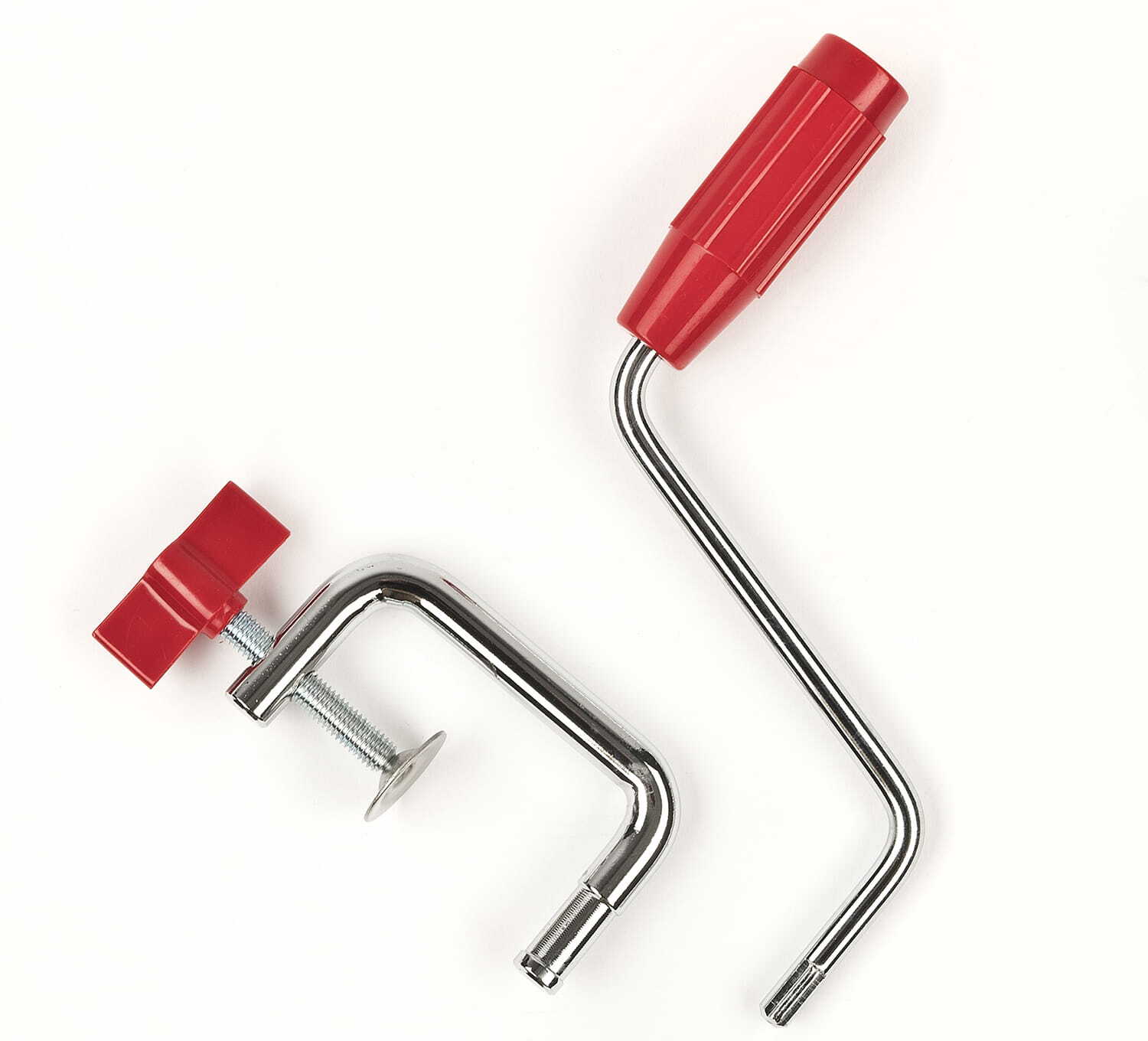
To begin with, make sure you secure the machine firmly on a flat, stable surface. The clamp is designed precisely for this purpose: to hold the machine in place whilst you turn the handle, so you can work comfortably and safely.
For the first pass, set the rollers to the widest setting. Pass a small piece of dough through the rollers, then fold the dough over itself and dust it lightly with flour. Repeat this process three or four times. This step helps to make the dough more uniform and compact.
Once the dough begins to become smooth, you can gradually reduce the thickness of the rollers. It is best not to jump from one setting to another too quickly. It is better to reduce the thickness gradually, guiding the dough with your free hand as it emerges from the machine. This will ensure it remains even and does not tear.
The finished sheet can be used whole for lasagne, cut by hand with a knife, or passed through the cutting rollers to achieve the desired shape. For a clean cut, it is best to let it dry for a few minutes before feeding it through the rollers.
The secret to perfect pasta sheet
Perfect puff pastry comes from a balance between the dough, resting time, rolling and attention to detail.
The first secret is the consistency of the dough. If the dough is too wet, it sticks to the rolling pins. If it is too dry, it breaks and cracks. The right dough is firm but not hard, elastic but not soft. When you touch it, it should offer a little resistance without sticking to your fingers.
The second secret is the flour. A light dusting on the pastry helps it pass through the rollers and makes the process smoother. Too much flour, however, dries out the dough and makes the machine messier.
Last but not least, time plays a crucial role. This process can’t be rushed. It needs a dough kneaded with care, adequate resting time and gradual rolling. A manual pasta machine helps to achieve a good result more easily, but patience and attention are required.
Girmi manual pasta machine: keep culinary tradition alive, adding a splash of colour
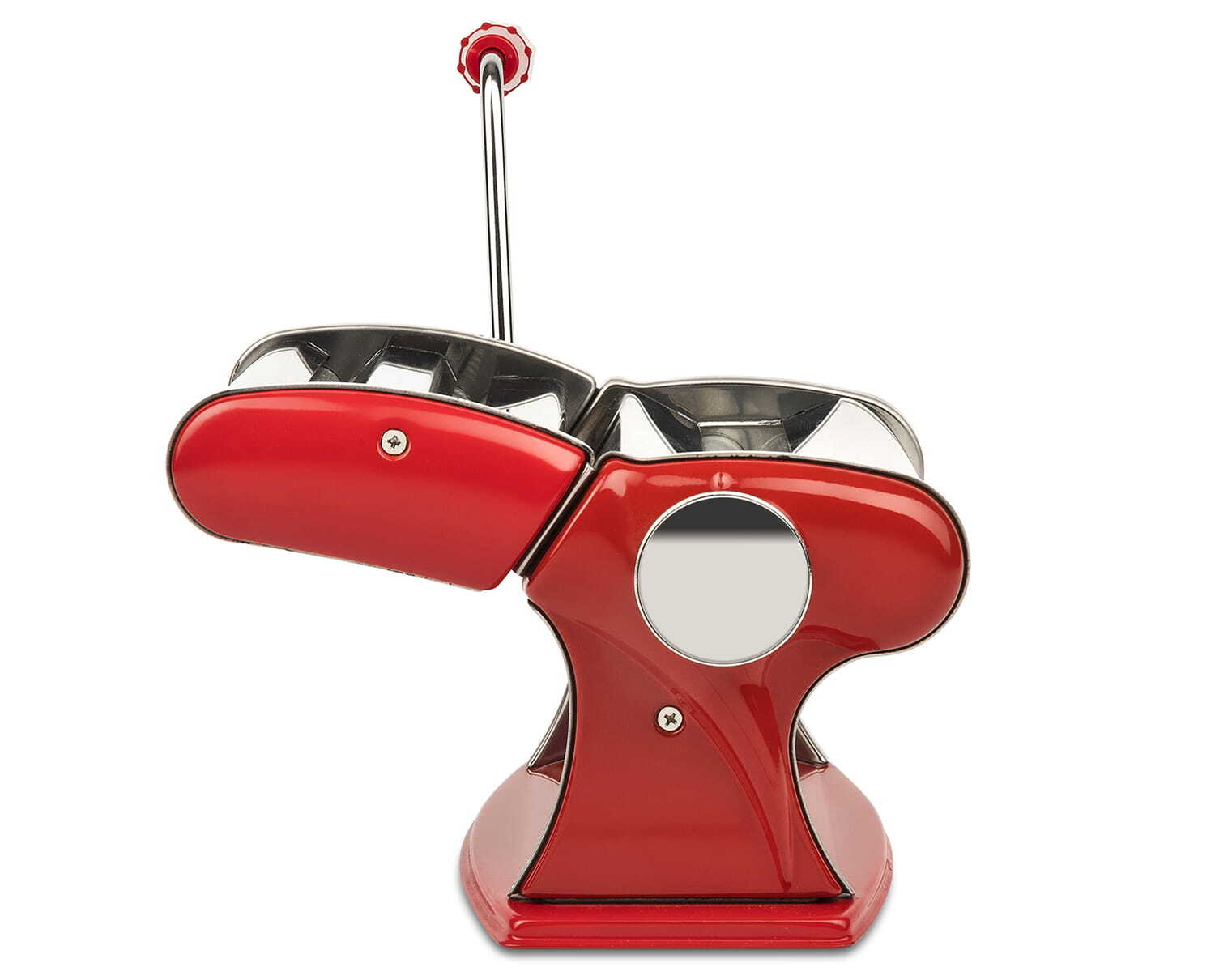
With the IM92, Girmi’s homemade pasta machine, tradition comes into the kitchen with a cheerful, homely feel. This pasta roller is perfect for those who want to make fresh pasta at home without sacrificing the pleasure of doing it by hand.
With just one machine, you can serve three different types of fresh pasta: lasagne sheets, tagliatelle for Sunday lunch and square spaghetti for a traditional Italian recipe with a homemade twist.
The clamping mechanism allows the pasta machine to be used stably on any surface. The aluminium rollers and stainless steel frame ensure smooth operation and make cleaning after use a breeze.
But the IM92 isn’t just practical. It features soft lines and vibrant colours reminiscent of 1960s kitchens – those lived-in spaces, full of objects that aren’t hidden away in a drawer. It’s a manual pasta machine that’s easy to use and lovely to leave on display, ready for the next batch of pasta.
Frequently asked questions
Why does the dough stick to the rollers?
Usually, the dough is too wet or hasn’t been floured enough. In these cases, it’s best to knead it a little more and dust it lightly with flour before putting it through the machine.
Can I use flours other than 00?
Yes, you can use other flours too. The important thing is to maintain a well-balanced dough that remains elastic and firm. Some flours absorb liquids differently, so you may need to adjust the quantities slightly.
How can I tell if the dough has the right consistency?
A well-made dough works well even before rolling. It should be firm, smooth and elastic. If it sticks to the rollers, it is too wet. If it tears or breaks easily, it is too dry.
Can I make fresh pasta without eggs?
Yes. Fresh pasta can be made using just flour and water. This works well for many traditional shapes and, if the dough is well-kneaded, it rolls out easily even with a manual pasta machine.
How do I clean the machine after use?
To clean it, simply remove flour and residue with a soft brush, a soft-bristled toothbrush or a slightly damp cloth. The accessories must not be washed in the dishwasher. Simple, regular cleaning helps to keep the machine in good condition over time.
How do you store fresh pasta?
Fresh pasta is at its best when cooked straight away. If necessary, you can leave it to dry for a short while and store it in an airtight container for a few days, or freeze it.
How do you dry fresh pasta?
To dry fresh pasta at home, you can use a fan-assisted oven on a cool setting, leaving the door slightly ajar for at least 30 minutes, or air-dry it on a rack, a clean tea towel or a drying board in a dry, well-ventilated room. In both cases, it is important not to overlap the pasta so that it does not stick together.